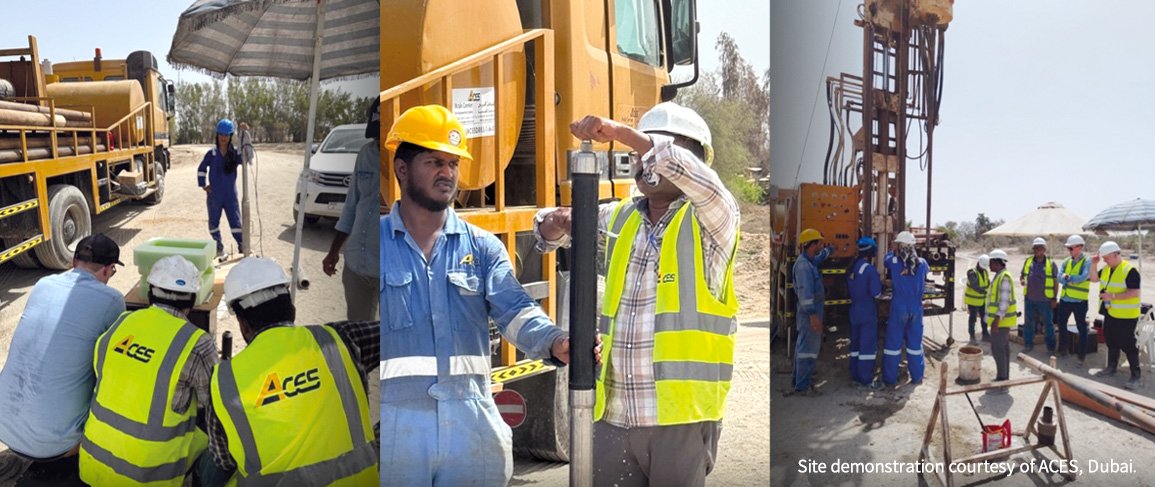
The Elastmeter is a tool used in geotechnical engineering to measure soil properties and behaviour. It is commonly known as a pressuremeter test in the geotechnical field. This test provides valuable information about the stress-strain behaviour of soils and is widely used in various geotechnical applications.
The Elastmeter is a probe inserted into a borehole and pressurised with water to expand against the surrounding soil. The pressure applied, and the corresponding volume change is measured, allowing engineers to determine the soil’s stress-strain characteristics.
• Soil Strength Determination: The Elastmeter test is commonly used to determine soil strength properties. By applying pressure to the soil and measuring the resulting volume changes, engineers can assess parameters such as shear strength and deformation characteristics.
• Foundation Design: The test results from the elastometer are crucial in designing foundations for structures. Understanding the soil’s behaviour under load helps engineers design foundations that can support the intended structure safely.
• Tunnel and Excavation Design: The pressuremeter test is valuable in assessing the stability of soil surrounding tunnels and excavations. It provides critical data on the soil’s ability to withstand the stresses imposed by these structures.
• Embankment Design: Engineers use pressuremeter tests to evaluate the soil suitability for constructing embankments. The test results help determine the optimal design parameters to ensure stability and prevent failures.
• Slope Stability Analysis: The pressuremeter test aids in analysing the stability of slopes by providing information on the soil’s mechanical properties. This data is crucial in assessing the risk of slope failures and designing appropriate stabilization measures …click for more


