Metals such as lithium are key enablers in the transition to clean energy given their role in power storage batteries making such metals vital components of the future UK economy.
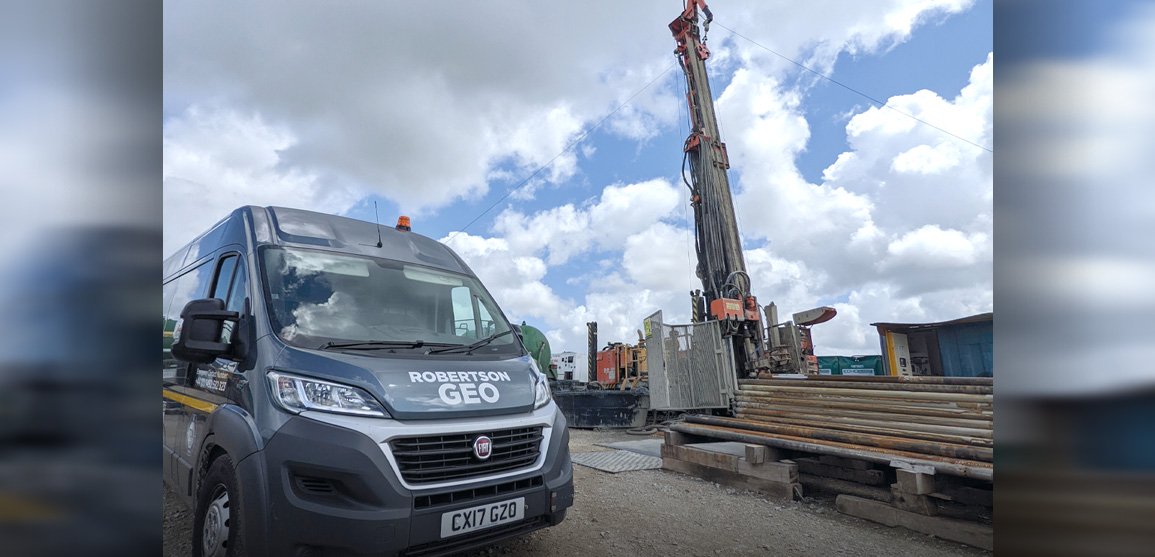
Boreholes, 1.6km deep and 800m deep at two drill sites were logged to determine the viability of extracting lithium brine from these two wells. These waters would be warm, a feature that would aid the lithium extraction and enable the process to maintain a low carbon footprint.
Lithium brine from geothermal waters is significantly hotter than that from a shallower depth, which means there is also potential for the geothermal waters to be used to produce heat for domestic or industrial use.
To be able to achieve the temperatures expected during the survey, Robertson Geo needed to deploy probes from the extended temperature range suite. The complete suite of probes comprised High Resolution Acoustic Televiewer®, High Resolution Optical Televiewer®, 3-Armed Caliper Gamma, Temperature Conductivity, Focussed Electric Resistivity (Guard Log) and a high-resolution Flowmeter.
The conductivity probe was run first as a top-down log to preserve the thermohaline column within the hole therefore minimizing mixing by the probe. This was followed by the televiewers and caliper. These tools allow Robertson Geo engineers and Cornish Lithium to identify any major or minor fractures and cavities where brine could ingress, aiding Cornish Lithium to identify potential pumping zones. The combination of data from the full suite of probes allowed Cornish Lithium to confirm target structures and to update their geological models accordingly.


