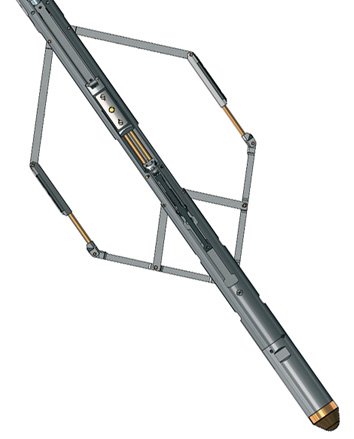
Borehole televiewers produce “unwrapped” oriented images of the borehole wall from which characteristic sinusoidal geological features can be picked, delineated and classified. The very high resolution images created by borehole televiewers, particularly the optical televiewer, allows features to be picked with accuracy and confidence. The optical televiewer and the acoustic televiewer are generally deployed in combination as the optical televiewer requires a dry or clear fluid filled borehole whilst the acoustic televiewer requires a fluid filled borehole. The acoustic televiewer also works well in opaque borehole fluids and muds. The resulting high resolution images, accurately delineated features and the ease of transferring the derived digital data to ground models puts borehole televiewers first on the list of probes for many subsurface investigations. Borehole televiewers have revolutionised the previously time consuming task of core orientation by providing accurate digital dips data and depth control, important where core recovery is incomplete. The highest quality borehole televiewer images come from boreholes with low rugosity and with careful centralisation excellent images can be obtained from a wide range of borehole diameters.
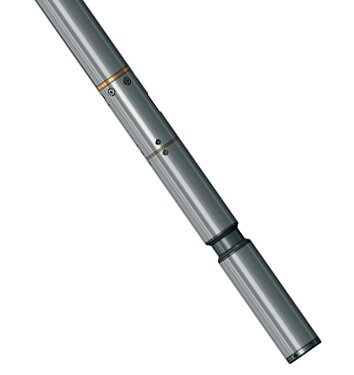
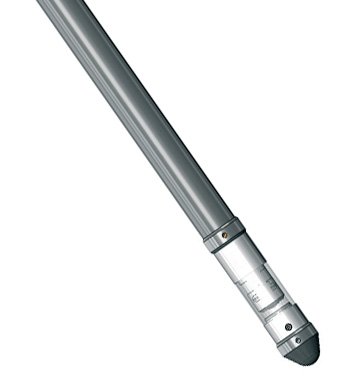
The High Resolution Optical Televiewer (Hi-OPTV)® measures the colour and shade of borehole wall reflected light using a ring of LEDs, conical mirror and light sensor arrangement to produce very high resolution images with pixel sizes as low as 1mm. The full colour optical televiewer image can distinguish changes in lithology as well as bed boundaries and fractures. In certain formations or where drilling mud has been used the borehole wall may become obscured by mud cake or particulates in the borehole fluid. To mitigate this, the borehole may need to be flushed with clean water or left standing before logging to achieve the best optical televiewer image.
The High Resolution Acoustic Televiewer (HRAT)® uses a high-frequency sonic pulse to produce two high resolution images of the borehole wall, amplitude and travel time, both in pseudo-colour. The amplitude image, effectively measuring hardness, usually shows the most detail with excellent delineation of fractures. The 2-way travel time image shows open fractures particularly well and the data can also be used to produce a breakout log of the borehole, showing washout zones, especially useful for calculating grout volumes. Acoustic televiewers are extremely tolerant to opaque borehole fluids and muds enabling them to obtain good images where optical televiewer images are obscured.
Images derived from both optical televiewers and acoustic televiewers are treated in the same manner for processing and may be used in combination to cover dry, clear fluid and opaque sections of the same borehole. Borehole televiewer logs are normally oriented to magnetic north at time of logging but can be converted to grid north or true north if required. The tilt and azimuth of the borehole are recorded to allow correction to true vertical depth and to provide automatic correction for the delineation of features. GeoCAD® software may be used to display the logs and to provide tools for log manipulation, feature picking, classification, commenting and statistical analysis in industry standard formats such as Tadpole plots, Wulff plots and Rose diagrams. Delineated geological features from borehole televiewers are finally collated in an ACSII file suitable for import into ground models.
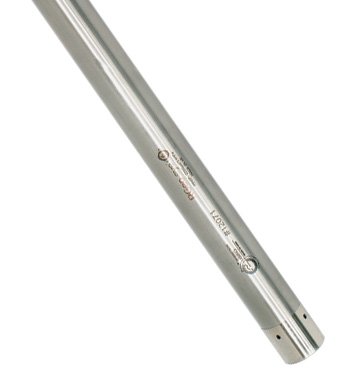
The RGeo-eye® borehole camera is a slim line probe using high speed RGeo-fast® digital comms on 4-core or coaxial cable to record a full colour digital video image together with borehole inclination. The borehole camera uses a built-in LED array and wide angle lens to record a down view of the borehole. The RGeo-eye® records the complete sidewall or casing of a borehole and a full 360° unwrapped image of the borehole can be easily derived using RGeo-eye® Visualiser software. Primarily a probe for borehole inspection, the borehole camera is widely used to assess the condition of casing, organic build-up and installations in active water wells. Further applications include dam, bridge and piling inspection via boreholes drilled into the structures producing a permanent visual record of condition.